Water Quality Updates
Water Quality Updates
PST Lakes Weed Control Program (March 2026)
PST community members and riparian owners have questions and concerns about how weed control is managed in our lakes and waterways. The Water Quality Committee presents this informational document to address the most frequent ones we encounter.
Compiled by Committee Member Todd Rooney
1) How is the weed control program funded?
- During the Aug. 9, 2022 Fenton Township Board Meeting, a 5-year Special Assessment District was reviewed and approved. The upcoming 2026 season represents year 4 of this assessment period, and will raise approximately $108,500.
- The assessment share is $194.28/year, and applies to a total of 596 parcels with riparian rights to the lake system. (Breakdown: 508 parcels - 1x share; 26 parcels - 0.5x share; 60 parcels - 0.25x share; Ponemah Lakeside Retreat - 6.5x share; and Lake Ponemah Marina - 15x share).
2) What is the overall objective of the weed control program?
The objective is threefold: to control invasive weed species AND maintain moderate native vegetation for ecological balance AND preserve navigable waters for recreation.
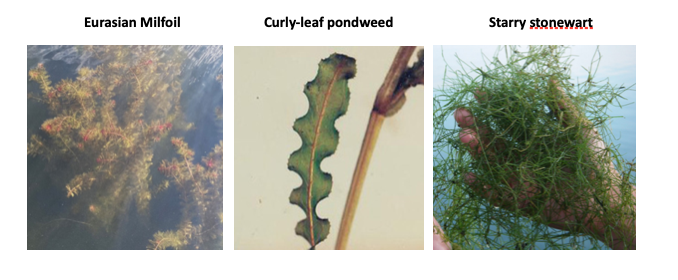
Targeted invasive weed species include:
3) What are the changes for the upcoming season? There are two. Beginning with the 2026 season, Fenton Township has approved two new contractors for weed herbicide application and muck removal trials, and weed harvesting and removal, respectively:
A: A new Chemical Aquatic Plant Control contractor: Aqua-Weed Control of Holly, MI (https://aquaweed.com/) will be responsible for the application of chemical weed treatment. This local company was chosen with the objective of providing improved scheduling flexibility and faster response times to optimize chemical treatment application. Aqua-Weed Control will also use wood stakes for notification, rather than stapling notices to trees.
B: A second new contractor, PLM Lake and Land Management Corp (https://plmcorp.net/great-lakes-region/), was engaged to perform weed harvesting and removal. This season will also see the introduction of mechanical weed harvesting of native species near shorelines where the State normally does not allow herbicide treatment. The goals are to improve navigation in high-use areas, remove excess plant biomass from the lake, and to reduce long-term muck accumulation. The plan is to implement this activity in August which is prior to die-off (for muck control), while still allowing some regrowth for continued nutrient uptake.
4) How will the chemical treatment and mechanical harvesting activities be directed? Can residents provide input?
- Our Environmental Consultant, Progressive Companies, under the direction of our Lake Biologist Jared Laughlin, conducts on-site assessments to determine the location and timing of weed control activities.
- Members of the Water Quality committee will be in communication with Progressive on the planning and results of these assessments.
- Feedback from residents is encouraged and will be taken into consideration. Please contact any member of the Water Quality committee if you have specific areas of concern or questions. The best manner to do that is via the “Big Red Button” at the top of the PST Watershed page of the PST Lake Association website: https://www.pstlakeassociation.com/pst-watershed-oversight/